
Take My Lunch Money
Put your money where your gym is.
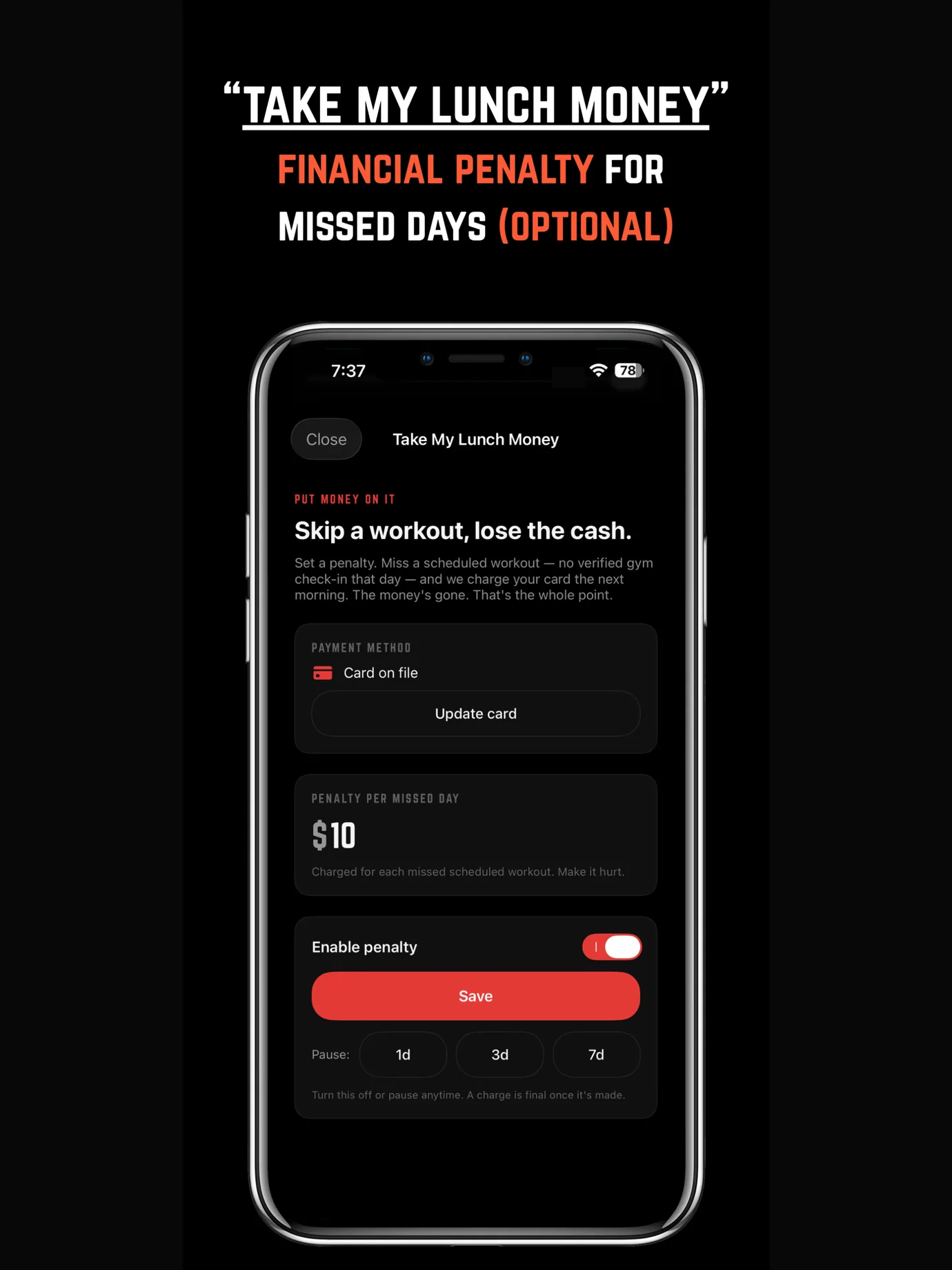
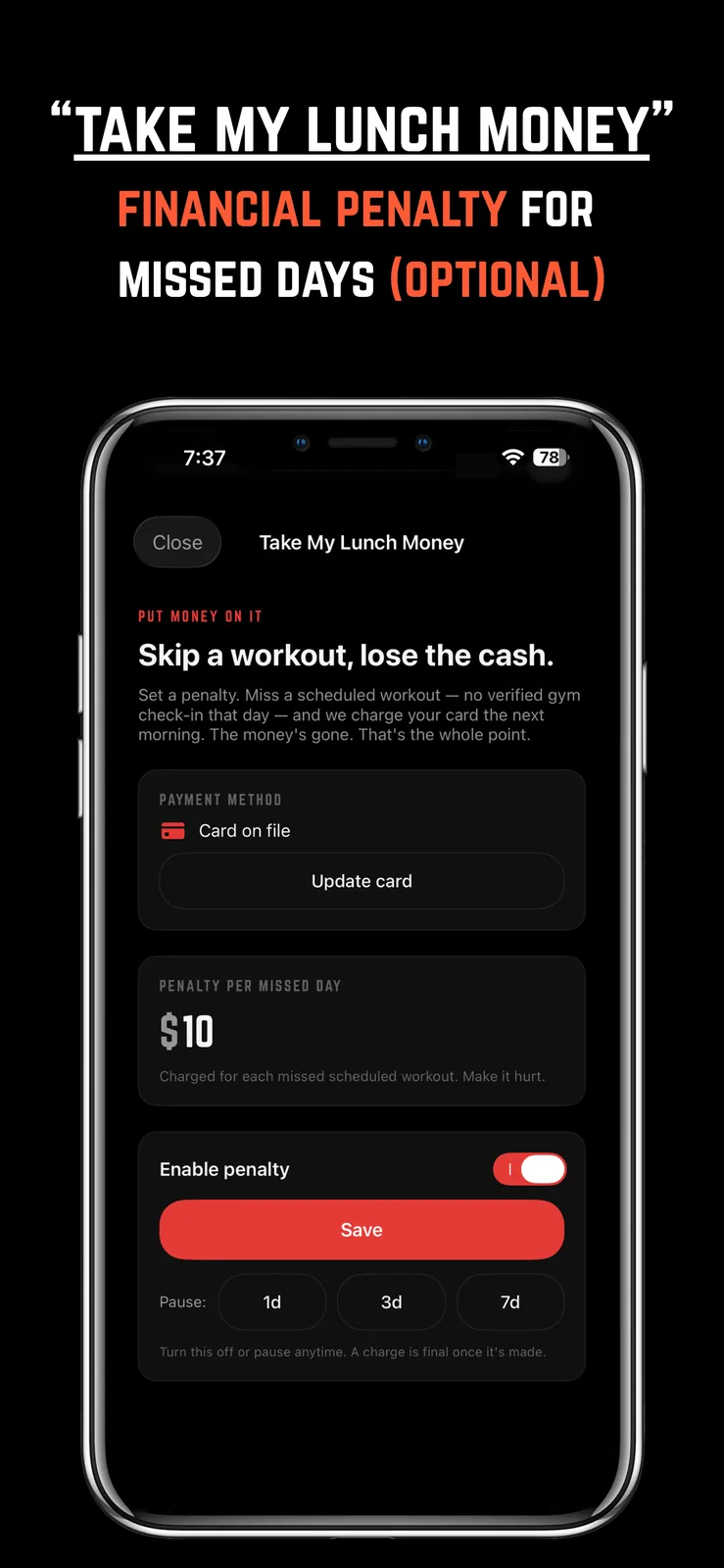
Take My Lunch Money puts real cash on the line. You pick the amount. If a training day ends and you never checked in, your card gets charged.
It stays off unless you turn it on, and you set the price, as low as 50 cents. If it is getting late and you still have not checked in, your bully texts you at 8pm, so you always get one last shot.
“youngblood, no check-in on the books. midnight comes, $10 walks. i'd get moving.”
Unc, on the record
Scroll →
Set your own amount
Choose what a missed day costs you. It can be as small as 50 cents. Make it sting as much as you need it to.
A text at 8pm
If a training day is almost over and you have not checked in, your bully texts you at 8pm. Nothing is charged until midnight, so you still have time to go.
Only a real check-in counts
With money on the line, a tap is not enough. You check in with your gym's location or a photo from the gym, so nobody can fake it. Not even you.
Pause it any time
Sick, hurt, or away? Pause the bully and nothing gets charged. Rest days never cost you a thing.
This one comes
with a bully attached.
Free to download on iPhone. One subscription unlocks the whole app, take my lunch money included, plus the four voices that make sure you actually use it.
- Take My Lunch Money, Explained: How Gym Bully AI's Penalty WorksTake My Lunch Money is Gym Bully AI's opt-in penalty. Here's the full walkthrough: setup, the Stripe card, verified check-ins, warnings, charges, and safety.
- How Much Money Should You Put on the Line for a Workout?Wondering how much to bet on workouts? Here's how to find a stake that stings without wrecking you, with worked examples by budget and honest caveats.
- Is It Safe to Let an App Charge You for Skipping the Gym?Is it safe to let an app charge you for skipping the gym? Here's exactly what to check before handing over your card, and how a good penalty app earns trust.
- Does Charging Yourself for Skipping Workouts Actually Work?Does charging yourself for missing workouts work? An honest look at the evidence, when financial stakes succeed, when they backfire, and who should skip it.